The American Quran Institute’s Noorani Qaida Course in the USA teaches Arabic letter recognition, vowel application, and phonetic accuracy through structured progression. Students master Arabic alphabet foundations, connecting letters, and pronunciation rules before advancing to Quranic recitation.
American learners often lack structured Arabic phonetics training. This Noorani Qaida course corrects that gap by addressing the specific challenges English speakers face with Arabic sounds unfamiliar to their native tongue.
More Details Pricing Testimonials


The American Quran Institute’s Noorani Qaida Course in the USA begins with isolated Arabic letter shapes, then progresses through vowel markings (Fatha, Kasra, Damma), Sukoon application, Shadda emphasis, Tanween variations, and Madd elongation rules in reciting the Quran. Each lesson isolates one phonetic concept before combining skills.
Noorani Qaida Course students practice Makharij (articulation points) for letters like ع, ح, and ق—sounds absent in English. Drills target the precise tongue and throat positions required for accurate Arabic pronunciation.
The American Quran Institute sequences Noorani Qaida lessons to prevent the confusion that occurs when learners skip foundational phonetic rules.
Students identify all 28 Arabic letters in isolated form before encountering connected script. Recognition drills separate visually similar letters like ب, ت, ث and ج, ح, خ to prevent lifelong mixing errors.
Fatha, Kasra, and Damma markings determine vowel sounds in Quranic Arabic. Students apply each Haraka to every letter, building muscle memory for vowel-consonant combinations that don’t exist in English phonetics.
Sukoon marks consonant silence; Shadda marks consonant doubling. English speakers initially skip both. Exercises slow reading pace deliberately, forcing attention to these marks before speed is introduced.
Tanween adds nasalized endings (ً ٌ ٍ) absent in English. Madd rules extend vowel duration by two, four, or six counts. Both require listening before reading—students hear examples before attempting them.
Outcomes
Learners distinguish all 28 Arabic letters in isolated, initial, medial, and final positions. Recognition speed increases through timed drills that eliminate hesitation between similar shapes.
Students pronounce Fatha, Kasra, and Damma correctly on every letter, including difficult sounds like ص, ض, ط, ظ. Accuracy is verified through one-on-one recitation with qualified instructors.
Silent consonants (Sukoon) and doubled consonants (Shadda) appear correctly in student recitation. Mistakes drop sharply after targeted exercises that isolate these two frequently ignored markings.
Nasalized endings (ً ٌ ٍ) are pronounced clearly and consistently. Students stop adding extra vowels or skipping Tanween entirely—common errors among English-speaking beginners.
Students extend vowels for the correct duration (two, four, or six counts) based on Madd type. Timing accuracy is verified through instructor feedback during live recitation sessions.
Students read simple Quranic verses without reverting to guessing or skipping unfamiliar words. The phonetic foundation from Noorani Qaida eliminates the need to re-learn Arabic sounds during Quran study.
Why Choose us?
Each student receives individual attention during recitation. Instructors correct Makharij errors immediately, preventing incorrect pronunciation from becoming permanent habits.
The American Quran Institute's tutors hold Ijazah certifications in Quranic recitation and specialize in teaching non-native Arabic speakers with proven phonetic correction methods.
Lessons accommodate American time zones and work schedules. Students book sessions around professional, academic, and family commitments without sacrificing instruction quality.
Monthly tuition remains accessible without hidden fees. Payment plans are available for families enrolling multiple children or adults seeking long-term Arabic and Quran study.
Instructors document each student's mastery of letter recognition, Harakat application, and Makharij accuracy. Parents and adult learners receive regular updates on skill development.
Lessons anticipate the specific errors English speakers make with Arabic sounds. Exercises target ع, ح, ق, and other letters absent in English phonetics.
Students practice recitation during every session, not just theory. Instructors use repetition drills and correction cycles that build confidence alongside accuracy.
Students advance only after demonstrating mastery of current material. Rushing through lessons before achieving accuracy is not permitted, preventing gaps in foundational skills.
Areas we serve in The USA
Related Courses
The American Quran Institute teaches Beginner to Advanced levels: Quranic Arabic, Modern Standard Arabic, conversational skills, Tajweed, Hifz, and specialized Islamic studies tracks.
The American Quran Institute's Tajweed Course for Ladies in the USA teaches Quranic recitation with precision. Students learn Makharij al-Huruf, Sifat al-Huruf, and advanced Tajweed application through one-on-one sessions with qualified female instructors who understand the technical demands of accurate recitation.
Explore Course
The American Quran Institute's Tajweed Course for Adults in the USA teaches proper Quranic recitation through step-by-step phonetic training. Adult learners master makharij al-huruf (articulation points), sifaat (letter characteristics), and Tajweed rules applied directly to Quranic verses during one-on-one sessions.
Explore Course
The American Quran Institute's Tajweed Course for Kids in the USA teaches young learners the precise articulation rules that transform basic Quranic recitation into accurate, confident reading. This program covers Makharij (articulation points), Sifaat (letter characteristics), and foundational Tajweed rules through age-appropriate methods designed for children's learning patterns.
Explore CourseStudents who complete Noorani Qaida gain the phonetic foundation needed for Quranic recitation, Tajweed application, and confident Arabic reading.
Testimonials
The American Quran Institute's graduates demonstrate measurable academic progress, professional advancement, and personal growth through structured Arabic and Quran study across the United States.
I joined Shaykhi Academy to improve my Tajweed, and I noticed a steady improvement in my reading after a few weeks. The lessons are structured and easy to follow and the teachers and patient and professional. My teacher, Dr. Mahmoud explains concepts clearly and makes sure I understand before moving on. I’ve found that my pronunciation has improved during prayer and in reading Quran since starting the course. Overall my experience is very positive, and I would recommend it to others who want to improve in their Quran journey.
Asalamu Alaikum! I’m so blessed I found Shaykhi Academy. My teacher Ms. Nada is so caring and compassionate about teaching. I’ve learning and gaining lot of meaningful Islamic knowledge and mastering the Arabic Quran reading. The Service Company is very helpful, cooperative and passionated as well.
Real transformations from students who mastered the Quran with our courses
I took a class at Shaykhi Academy with Mr. Luqman, and I had a lot of fun learning with him. I even got the chance to meet him in Egypt! I learned a lot from my time with him, including Tajweed, Tahweed, Arabic reading, and Quran. I've been learning with him for about a year now. Thank you for your time.
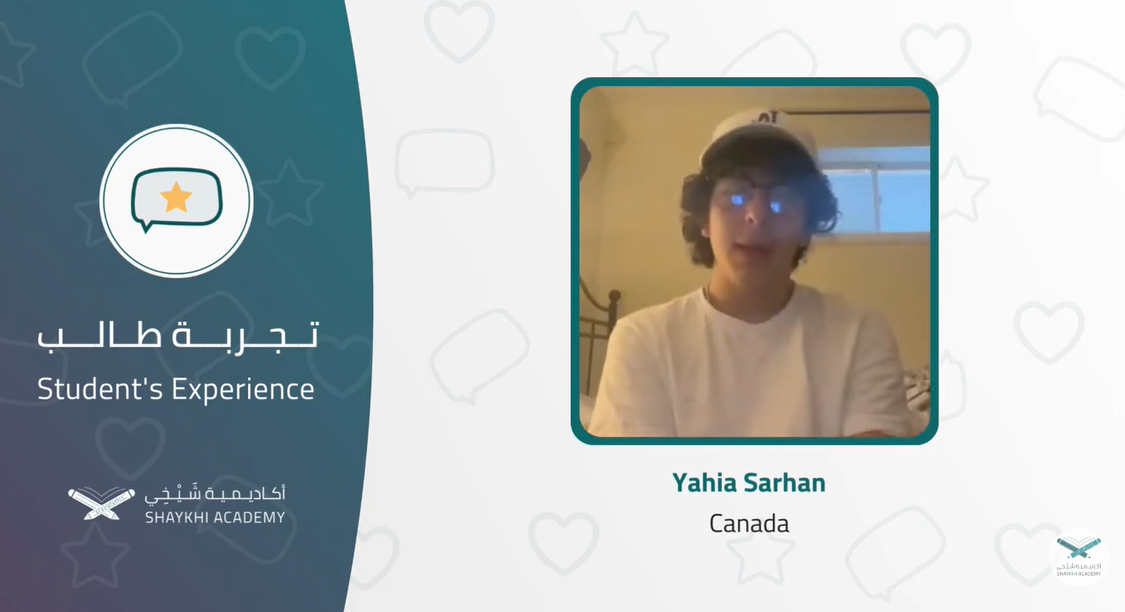
I’m Yahia Sarhan, I’m 15 years old and I’m from Canada. I’ve been a student at Shaykhi Academy since 2019, so about three or four years now. It’s been a great learning opportunity for me and I’ve learned a lot about Islamic studies, the Quran, and Arabic reading. I’d definitely recommend it to anyone who’s trying to learn.
Students start Quranic recitation and Tajweed study with confidence after completing structured Noorani Qaida training that addresses English speakers’ specific phonetic challenges.
Common questions about The American Quran Institute's Noorani Qaida Course in the USA, answered directly for serious learners seeking structured Arabic phonetics training.