The American Quran Institute’s Arabic Lessons for Kindergarten in the USA introduce American children ages 4–6 to Arabic letter recognition, Arabic speaking basics, and Arabic listening through age-appropriate activities, visual prompts, and short interactive exercises in one-on-one online sessions.
Arabic is the fifth most spoken language in the world, and demand for it is growing across American schools and professional sectors. American Children who develop Arabic listening and Arabic speaking skills this early show stronger overall phonemic awareness, an advantage that benefits their English development too.
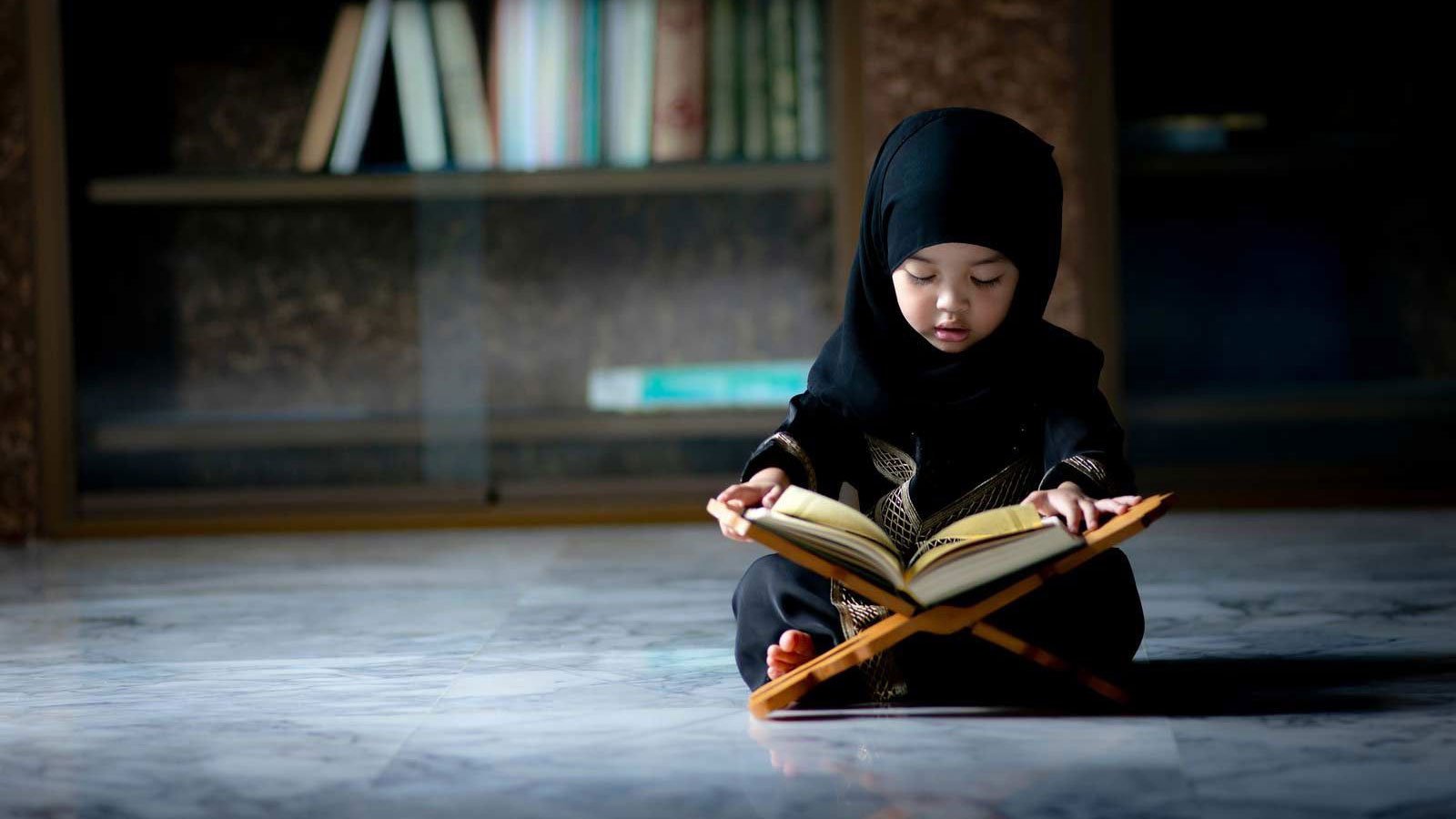
The American Quran Institute’s Arabic Lessons for Kindergarten in the USA are structured around four core areas: Arabic letter recognition, Arabic short vowel sounds, foundational Arabic speaking vocabulary, and Arabic listening comprehension. Each one-on-one session builds on the last with clear, measurable steps.
USA Children work through the Arabic alphabet systematically, learning each letter’s shape, sound, and connective forms. They practice short vowels, trace letters, and begin using simple Arabic conversational phrases. Arabic listening activities train the ear for sounds that English doesn’t produce, starting before Arabic reading is introduced.
The American Quran Institute’s Arabic Lessons for Kindergarten in the USA follow a deliberate sequence.
Most 4-year-olds in the USA need four to six exposures to a new letter before it sticks. The American Quran Institute’s tutors use visual cards, letter-tracing, and repetition to build solid Arabic letter recognition. USA Children see the letter, say its sound, and trace its shape every session.
Fatha, Kasra, and Damma don’t exist in English, so American kindergarteners don’t produce them naturally. The American Quran Institute’s Arabic Lessons for Kindergarten use ear-first training: USA children hear each vowel sound before any written form is introduced. That order prevents guessing habits from forming.
USA Children learn Arabic words tied to their immediate world, colors, numbers one to ten, family members, classroom objects, and everyday greetings. Arabic-speaking practice runs through short question-and-answer exchanges every session. By week six, most USA children are producing short Arabic sentences, not just repeating isolated words.
Arabic listening comes before Arabic reading, always. The American Quran Institute’s tutors use audio patterns and repetition until children in the USA distinguish close sounds before those sounds appear on a page. English gives no preparation for ح or ع. American children need this ear training first.
Outcomes
By the end of The American Quran Institute's Arabic Lessons for Kindergarten in the USA, American children can identify all 28 Arabic letters in their isolated forms. They know each letter's name and primary sound. They can point to a letter, say its sound, and trace its shape. That combination of visual, auditory, and motor reinforcement is what makes the learning durable.
Fatha, Kasra, and Damma have no English equivalents, which means American kindergarteners need deliberate ear training to produce them accurately. Through The American Quran Institute's Arabic Lessons for Kindergarten in the USA, American children hear each short vowel in isolation first, then in words. By the time short vowels appear in written Arabic, USA children already know what they're hearing. That head start changes how fast Arabic reading develops.
Arabic-speaking confidence at age five doesn't come from word lists. It comes from using words in actual exchanges. The American Quran Institute's Arabic Lessons for Kindergarten in the USA give American children structured speaking practice every session, greetings, simple questions, and short answers. Most American children produce their first full Arabic sentence within four to six weeks. That moment of real use is the turning point.
Accurate Arabic listening is the foundation of accurate Arabic speaking and Arabic reading. Through The American Quran Institute's Arabic Lessons for Kindergarten in the USA, American children learn to distinguish close Arabic sounds like ك and ق, or ح and هـ, before those distinctions appear on a page. Building that ear at age five prevents pronunciation habits that would otherwise take months to correct.
American Children who complete The American Quran Institute's Arabic Lessons for Kindergarten in the USA leave with an active Arabic vocabulary of numbers, days of the week, colors, body parts, family members, and common classroom objects. These aren't memorized lists. Children in the USA practice this vocabulary in short spoken exchanges every Arabic session, so the words stay in active Arabic speaking use rather than passive memory.
Research on early childhood language acquisition consistently shows that children in the USA who learn a second language before age six develop stronger phonemic awareness overall,l including in English. Through The American Quran Institute's Arabic Lessons for Kindergarten, USA children don't just gain Arabic speaking and Arabic listening skills. They build the cognitive flexibility that makes all language learning more natural as they grow.
Why Choose us?
Every kindergarten student in the USA works directly with a dedicated instructor, with no group distractions, no waiting. Arabic lessons move at the child's actual pace.
The American Quran Institute's tutors specialize in early childhood Arabic instruction. They understand how kindergarten children in the USA absorb Arabic sounds and what breaks their focus.
The American Quran Institute offers flexible pricing for kindergarten Arabic lessons in the USA, giving American families access to quality Quranic Arabic education without financial strain.
Families in New York, California, Texas, or anywhere in the United States can schedule kindergarten Arabic lessons at times that fit their household routines.
USA Children learn Makharij-accurate Arabic pronunciation from native speakers. The American Quran Institute's instructors bring authentic Arabic articulation to every Arabic kindergarten lesson.
The American Quran Institute provides consistent updates on Arabic letter recognition, Arabic speaking development, and Quranic vocabulary retention for every kindergarten student in the USA.
Mornings, evenings, or weekends, The American Quran Institute's kindergarten Arabic lessons in the USA adapt to American family schedules, building the Arabic learning habit from the start.
Kindergarten children in the USA retain more in 20 focused minutes than in 60 scattered ones. The American Quran Institute's lesson structure reflects that reality directly.
Areas we serve in The USA
The American Quran Institute serves students across the USA—New York, Los Angeles, Chicago, Houston, and teaches online learners worldwide through live one-on-one sessions.
Related Courses
The American Quran Institute offers beginner-to-advanced courses covering Quranic Arabic, Modern Standard Arabic, conversational Arabic, Tajweed, Hifz, and specialized Islamic studies tracks.
The American Quran Institute offers Arabic classes for adults in the USA that prioritize fluency over memorization, conversation over textbook drills. Adults learn Modern Standard Arabic and Quranic Arabic through structured one-on-one sessions tailored to their pace and goals.
Explore Course
The American Quran Institute's Learning Arabic for Non-Arabic Speakers in the USA program starts where most courses don't, with the sounds that English simply doesn't have.
Explore Course
The American Quran Institute's online Arabic course in the USA equips American learners with Arabic grammar, Modern Standard Arabic conversation, and Quranic vocabulary. Students progress through structured lessons covering Arabic script mastery, sentence construction, verb conjugation patterns, and practical communication skills for real-world application.
Explore CourseOne-on-one Arabic lessons for kindergarteners in the USA. The American Quran Institute’s tutors begin exactly where your child is.
Testimonials
The American Quran Institute's graduates across the United States report measurable gains in Arabic reading accuracy, Quranic recitation, professional Arabic communication, and Islamic studies comprehension.
I joined Shaykhi Academy to improve my Tajweed, and I noticed a steady improvement in my reading after a few weeks. The lessons are structured and easy to follow and the teachers and patient and professional. My teacher, Dr. Mahmoud explains concepts clearly and makes sure I understand before moving on. I’ve found that my pronunciation has improved during prayer and in reading Quran since starting the course. Overall my experience is very positive, and I would recommend it to others who want to improve in their Quran journey.
Asalamu Alaikum! I’m so blessed I found Shaykhi Academy. My teacher Ms. Nada is so caring and compassionate about teaching. I’ve learning and gaining lot of meaningful Islamic knowledge and mastering the Arabic Quran reading. The Service Company is very helpful, cooperative and passionated as well.
Real transformations from students who mastered the Quran with our courses
I took a class at Shaykhi Academy with Mr. Luqman, and I had a lot of fun learning with him. I even got the chance to meet him in Egypt! I learned a lot from my time with him, including Tajweed, Tahweed, Arabic reading, and Quran. I've been learning with him for about a year now. Thank you for your time.
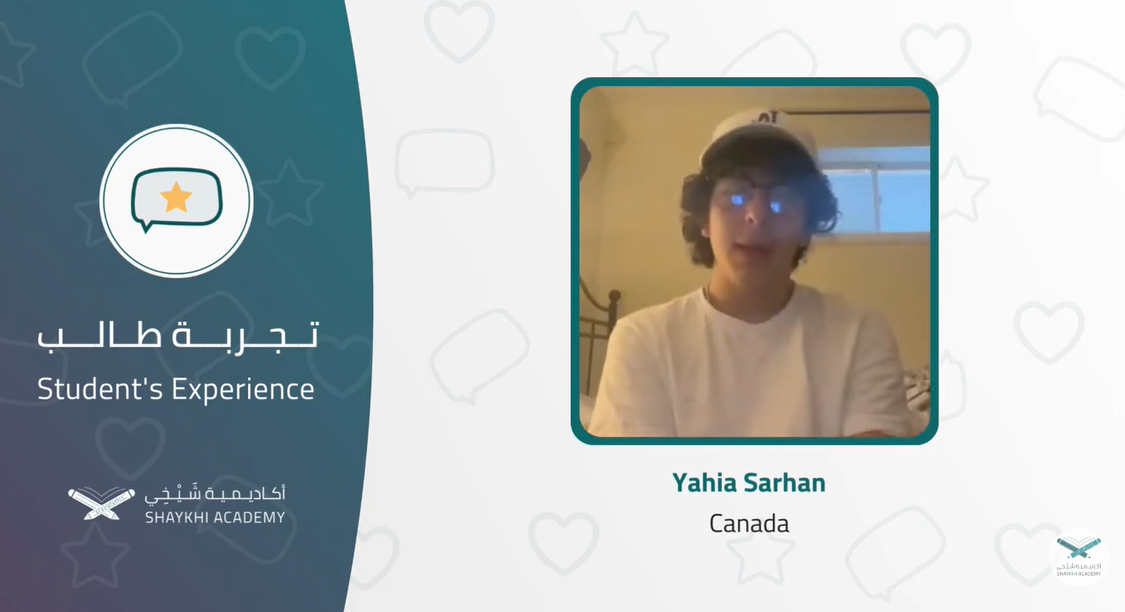
I’m Yahia Sarhan, I’m 15 years old and I’m from Canada. I’ve been a student at Shaykhi Academy since 2019, so about three or four years now. It’s been a great learning opportunity for me and I’ve learned a lot about Islamic studies, the Quran, and Arabic reading. I’d definitely recommend it to anyone who’s trying to learn.
Structured one-on-one Arabic lessons for kindergarteners in the USA. The American Quran Institute’s tutors are ready to build on the foundation from session one.
Real questions from American parents considering kindergarten Arabic lessons are answered directly, without filler.