Students looking for memorization support usually want more than a standard recitation class. They are often searching for a clear system that helps them memorize steadily, review consistently, and avoid losing what they already know. The American Quran Institute builds lessons around that goal, giving each student a guided path that strengthens retention, improves accuracy, and makes long-term progress more realistic.
Before students can retain new passages well, they need to recite with confidence and accuracy. Early training focuses on correcting weak points in pronunciation and helping learners produce Arabic letters more clearly, especially sounds that are difficult for English speakers. This stage gives students a stronger base, so memorization is not built on repeated mistakes that become harder to fix later.
Correct recitation plays a major role in how well students remember what they learn. Teachers guide learners through proper flow, sound patterns, and verse delivery while introducing new portions, so memorization develops in the right form from the beginning. This makes review more effective and reduces the need to relearn passages after errors become habitual.
Many students struggle with memorization because they do not have a practical rhythm for learning and revising. Lessons are designed to create that rhythm. Students work through suitable portions, revisit previous passages regularly, and follow a pace that matches their ability instead of rushing. This helps learners stay motivated, organized, and more secure in what they have already memorized.
Outcomes
One of the biggest challenges in memorization is not learning new passages, but keeping earlier portions firm. Students benefit from a system that revisits previous material regularly instead of waiting until it begins to fade. With organized review built into the learning process, learners strengthen recall, reduce hesitation, and become more secure in the portions they have already completed. This leads to steadier progress and fewer gaps over time.
Memorization is more reliable when every new section is learned correctly from the beginning. Instructors help students refine pronunciation, correct recurring recitation errors, and repeat passages with proper delivery before moving forward. This prevents weak recitation from becoming a habit and makes future review much easier. For many learners in Detroit, accurate repetition is what turns memorization from a struggle into a stable skill.
Many learners lose momentum because they do not have a realistic structure for new memorization and review. A guided program helps solve that problem by breaking the process into manageable steps. Students follow a pace suited to their schedule and ability, which is especially important for adults balancing work, study, or family responsibilities. A routine that feels manageable is far more likely to continue, and that consistency creates meaningful results.
As retention improves and mistakes become less frequent, students often feel more comfortable reciting aloud in class, at home, and during prayer. Confidence grows when learners know they have reviewed properly and can move through passages without repeated uncertainty. This makes memorization feel more rewarding and gives students a stronger sense of progress with each stage of their learning.
Better outcomes do not come from repetition alone. Learners benefit when they also understand the flow and meaning of the verses they are working on. With simple guidance that adds context to memorized passages, students become more attentive, more engaged, and often better able to retain what they learn. That deeper connection supports both memory and motivation, especially for those in Detroit seeking a lasting relationship with the Quran.
Many students struggle with memorization not because of memory itself, but because certain Arabic sounds are unclear or inconsistent. When pronunciation is unstable, retention becomes weaker and mistakes repeat during revision. Instructors focus on correcting these specific issues by isolating difficult letters and training students to produce them correctly within real Quranic words. With consistent practice, learners begin to recite more naturally, which makes memorization smoother and reduces confusion during review.
Why Choose us?
Memorization requires more than listening and repeating. Students need teachers who know how to correct errors early, strengthen weak areas, and guide review in a way that protects long-term retention. The American Quran Institute provides that kind of focused instruction, helping learners move forward with more confidence and fewer recurring mistakes.
Every student memorizes differently. Some need extra repetition, some need tighter review plans, and others need help staying consistent from week to week. Private lessons make it easier to respond to those differences. Instead of following a group pace, each learner receives direct support based on individual progress, challenges, and goals.
Many students in Detroit are balancing school, work, family life, and other responsibilities. A memorization program only works when it fits into real life. Online one-on-one sessions give learners the flexibility to continue building progress without the burden of commuting or adjusting everything around a fixed class model.
For many learners, memorization becomes difficult when pronunciation is not stable. The American Quran Institute understands the challenges English-speaking students often face with Arabic sounds and recitation patterns. Lessons address those issues directly, making it easier for students to memorize accurately and review without reinforcing mistakes.
Students stay more motivated when they can see what they have completed and what still needs attention. The American Quran Institute helps learners track new portions, revision strength, and areas that need more work. This gives students and families a clearer picture of progress and helps make each lesson more purposeful.
A strong memorization program should be sustainable, not something students begin and then leave because of cost pressure. The American Quran Institute offers accessible options that make regular one-on-one learning more manageable for families, professionals, and students who want steady improvement without unnecessary financial strain.
Lasting memorization depends on a solid base. Students who begin without clear recitation or reading skills often face more difficulty later. That is why the learning process supports strong fundamentals first, helping learners build the accuracy and confidence needed for smoother memorization over time.
Many adults want to return to Quran memorization but worry they are starting too late or have forgotten too much. The American Quran Institute creates a learning experience where students can rebuild step by step without embarrassment. That support makes it easier to stay committed and keep moving forward with confidence.
Areas we serve in The USA
Related Courses
The American Quran Institute teaches Beginner to Advanced Quranic Arabic, Modern Standard Arabic, conversational fluency, Tajweed mastery, Hifz programs, and Tafsir studies for all ages.


Families and individuals searching for Quran classes in Detroit often want more than basic online instruction—they need dependable teaching that helps them or their children read the Quran accurately, strengthen Tajweed step by step, and grow in Islamic understanding with real consistency.
Explore Course
For families and students in Detroit seeking a reliable way to build a stronger understanding of Islam, the American Quran Institute offers structured Islamic Studies instruction that provides a comprehensive foundation in the core Islamic sciences.
Explore Course

The American Quran Institute's Arabic classes in Detroit teach Modern Standard Arabic and Quranic Arabic through structured one-on-one sessions. Students work directly with qualified instructors who focus on Arabic reading accuracy, Arabic writing mechanics, Arabic listening comprehension, and Arabic speaking confidence across beginner through advanced levels.
Explore Course
Testimonials
Parents and students trust Our Academy because the Quran memorization center delivers on what it promises: structured teaching, real retention, and qualified Huffaz who care about results.

Asalamu Alaikum! I’m so blessed I found Shaykhi Academy. My teacher Ms. Nada is so caring and compassionate about teaching. I’ve learning and gaining lot of meaningful Islamic knowledge and mastering the Arabic Quran reading. The Service Company is very helpful, cooperative and passionated as well.

I joined Shaykhi Academy to improve my Tajweed, and I noticed a steady improvement in my reading after a few weeks. The lessons are structured and easy to follow and the teachers and patient and professional. My teacher, Dr. Mahmoud explains concepts clearly and makes sure I understand before moving on. I’ve found that my pronunciation has improved during prayer and in reading Quran since starting the course. Overall my experience is very positive, and I would recommend it to others who want to improve in their Quran journey.
Real transformations from students who mastered the Quran with our courses


I took a class at Shaykhi Academy with Mr. Luqman, and I had a lot of fun learning with him. I even got the chance to meet him in Egypt! I learned a lot from my time with him, including Tajweed, Tahweed, Arabic reading, and Quran. I've been learning with him for about a year now. Thank you for your time.
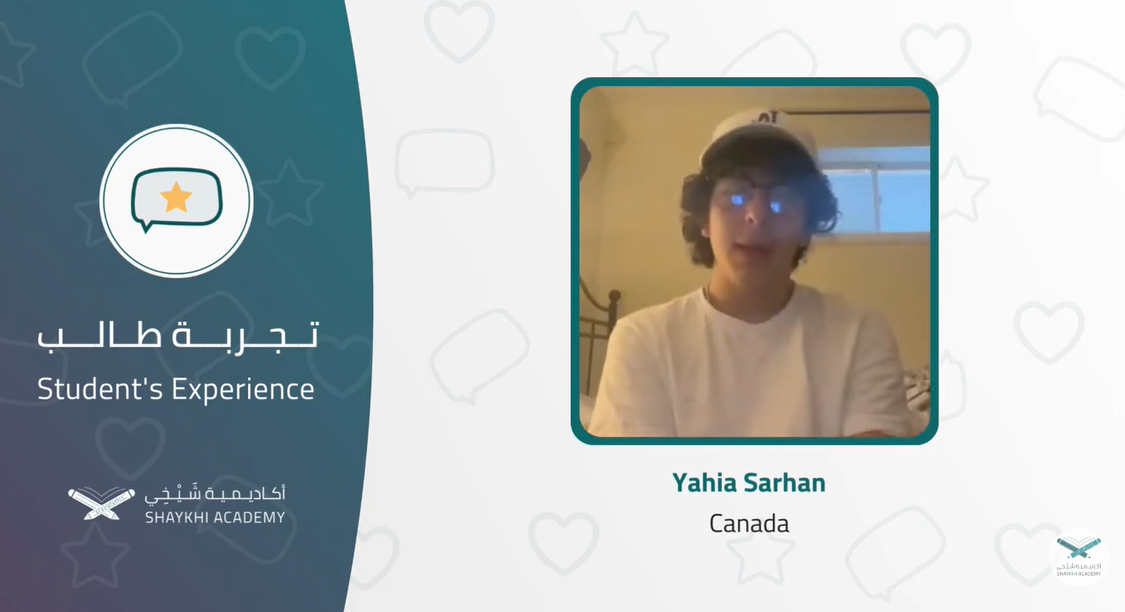

I’m Yahia Sarhan, I’m 15 years old and I’m from Canada. I’ve been a student at Shaykhi Academy since 2019, so about three or four years now. It’s been a great learning opportunity for me and I’ve learned a lot about Islamic studies, the Quran, and Arabic reading. I’d definitely recommend it to anyone who’s trying to learn.

The American Quran Institute answers the most common questions Detroit students and families ask before starting a memorization program, so expectations around structure, scheduling, and progress are clear from the beginning.