The American Quran Institute’s Arabic classes in New Jersey teach students Classical Arabic grammar, Modern Standard Arabic conversation, and Quranic vocabulary through one-on-one online sessions. Lessons cover Arabic phonetics, sentence construction, verb conjugations, and reading comprehension.
New Jersey’s multilingual communities create natural demand for Arabic literacy. Students gain practical communication skills for mosque engagement, professional advancement in healthcare or education, and deeper understanding of Islamic texts without relying on translations.
More Details Pricing Testimonials
The American Quran Institute’s Arabic classes in New Jersey address both Classical Arabic grammar rules and Modern Standard Arabic conversation patterns. Students work through noun cases, verb forms, sentence structures, prepositions, and vocabulary building across religious and contemporary contexts.
Lessons include Arabic dictation practice, text analysis of Quranic passages, dialogue exercises for real-world scenarios, and pronunciation drills targeting sounds absent in English. Students practice Arabic reading aloud, Arabic writing in connected script, and Arabic listening comprehension.
The American Quran Institute structures Arabic classes in New Jersey through progressive modules. Students begin with foundational elements before advancing to complex grammatical applications and conversational fluency.
English speakers learning Arabic often confuse ح and ه, or swap ص and س. These aren’t careless mistakes—English offers no reference point. Lessons isolate each letter’s articulation point, practice minimal pairs, and drill the sounds until they become automatic rather than guessed.
Most students memorize that فَعَلَ means “he did.” Few understand why the fatha appears, how verb forms shift meaning, or what happens when prefixes attach. Lessons break down verb patterns, noun cases, and grammatical markers that change how sentences function in Classical Arabic versus Modern Standard Arabic.
Adult learners often know vocabulary but freeze mid-sentence. They translate word-by-word from English, producing grammatically incorrect Arabic. Lessons train students to think in Arabic sentence patterns first—verb-subject-object order, gendered adjectives, and plural forms—before attempting complex professional or community dialogues.
Reading isolated letters is simple. Reading them connected at speed while tracking diacritics, processing meaning, and pronouncing correctly—that’s where students stall. Lessons combine timed reading drills, dictation exercises, and handwriting practice until Arabic script recognition becomes as automatic as reading English.

Outcomes
Most English editions of Islamic texts include full tashkeel. Authentic Arabic texts don't. Students learn to infer vowels from context, recognize root patterns, and parse sentences without diacritical crutches—essential for reading original scholarly works or historical manuscripts.
Students stop translating English sentences into broken Arabic. They internalize verb conjugation patterns, gendered agreement rules, and possessive constructions. Conversations shift from hesitant word strings to fluid, grammatically sound Arabic appropriate for professional or community settings.
Students move beyond English translations. They identify i'rab positions, understand why certain words take specific case endings, and recognize how verb forms alter meaning. This grammatical comprehension transforms Quran reading from passive listening into active linguistic analysis.
Handwriting Arabic isn't decorative—it's cognitive. Students practice until letter connections become automatic, diacritical marks appear naturally, and writing pace matches thinking speed. This muscle memory supports both note-taking during Islamic lectures and personal study documentation.
Students recognize when Quranic grammar diverges from contemporary news Arabic. They understand classical verb moods, archaic pronouns, and poetic structures absent in modern journalism—crucial for students engaging both religious texts and current Arabic media.
Lessons don't treat Arabic as exclusively Islamic. Students acquire vocabulary for medical appointments, business transactions, educational discussions, and community organizing. This dual-context approach makes Arabic practically useful in New Jersey's diverse professional and personal environments.
Why Choose us?
Sessions accommodate working professionals, parents, and students. Teachers adjust pacing, revisit challenging concepts, and focus on individual weak points without group pressure.
Teachers hold Arabic language certifications and teaching credentials. They explain grammatical concepts in English, provide cultural context, and correct pronunciation errors most online programs ignore.
Tuition remains affordable without sacrificing instruction quality. Payment plans and family discounts make consistent Arabic education financially sustainable for New Jersey households.
Students receive periodic evaluations measuring reading speed, grammatical accuracy, conversational fluency, and writing competence. Assessment results guide curriculum adjustments and identify areas requiring additional practice.
Lessons address both Quranic Arabic structures and contemporary usage. Students gain literacy in religious texts while building practical communication abilities for professional or community engagement.
Students book sessions around work shifts, childcare responsibilities, or school schedules. Teachers maintain consistent availability across time zones, supporting learners with demanding or unpredictable routines.
Teachers use screen-sharing tools, annotate student writing instantly, and demonstrate proper pronunciation through video. Technology supports immediate feedback without requiring physical classroom attendance.
Students access supplementary materials: verb conjugation charts, vocabulary lists, practice worksheets, and audio recordings. Resources support independent study between scheduled lessons.
Areas we serve
The American Quran Institute serves students across the United States—including New York, Los Angeles, Chicago, Houston, Phoenix, Philadelphia, Dallas, and beyond—plus online learners worldwide.
Related Courses
The American Quran Institute provides Arabic courses from beginner alphabet recognition to advanced Classical Arabic grammar, covering Quranic Arabic, Modern Standard Arabic, conversational skills, and specialized linguistic tracks.
The American Quran Institute's Quran Tafsir Course in the USA equips American Muslims with deep Quranic understanding through structured Islamic scholarship. Students explore classical Tafsir methodologies, contextual meanings, and linguistic analysis under qualified scholars who connect revelation to modern American life.
Explore Course
The American Quran Institute's Quran Memorization Course in the USA equips students with authentic Hifz techniques rooted in classical methodology. Learners master retention strategies, Tajweed application during memorization, and review cycles that prevent forgetting. The curriculum addresses Makharij accuracy, memorization pace management, and long-term retention frameworks used across centuries of Islamic scholarship.
Explore Course
The American Quran Institute's Quran classes in Plano are live, one-on-one online sessions taught by Ijazah-certified instructors. Quran Lessons cover Noorani Qaida foundations, Tajweed-compliant recitation, Makharij correction, and Quranic Arabic grammar structured by level, paced to the individual student.
Explore CourseThe American Quran Institute’s Arabic classes in New Jersey prepare students for real-world communication, Islamic text comprehension, and professional vocabulary expansion.
Testimonials
The American Quran Institute's graduates demonstrate measurable Arabic proficiency gains, with achievements spanning academic advancement, professional communication, mosque leadership roles, and independent Quranic study.
I joined Shaykhi Academy to improve my Tajweed, and I noticed a steady improvement in my reading after a few weeks. The lessons are structured and easy to follow and the teachers and patient and professional. My teacher, Dr. Mahmoud explains concepts clearly and makes sure I understand before moving on. I’ve found that my pronunciation has improved during prayer and in reading Quran since starting the course. Overall my experience is very positive, and I would recommend it to others who want to improve in their Quran journey.
Asalamu Alaikum! I’m so blessed I found Shaykhi Academy. My teacher Ms. Nada is so caring and compassionate about teaching. I’ve learning and gaining lot of meaningful Islamic knowledge and mastering the Arabic Quran reading. The Service Company is very helpful, cooperative and passionated as well.
Real transformations from students who mastered the Quran with our courses
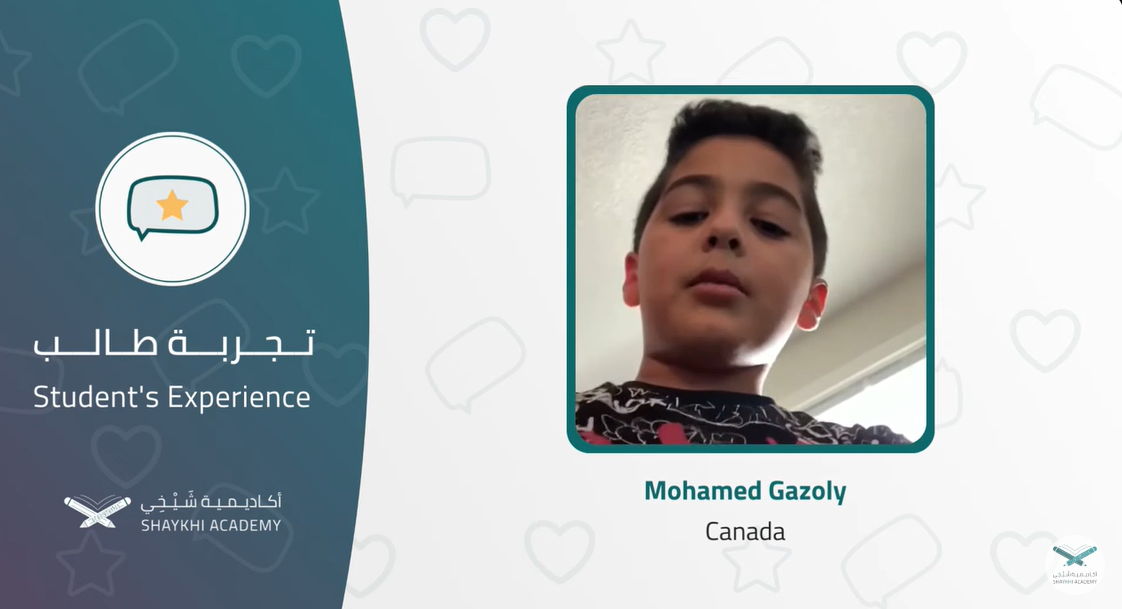
I took a class at Shaykhi Academy with Mr. Luqman, and I had a lot of fun learning with him. I even got the chance to meet him in Egypt! I learned a lot from my time with him, including Tajweed, Tahweed, Arabic reading, and Quran. I've been learning with him for about a year now. Thank you for your time.
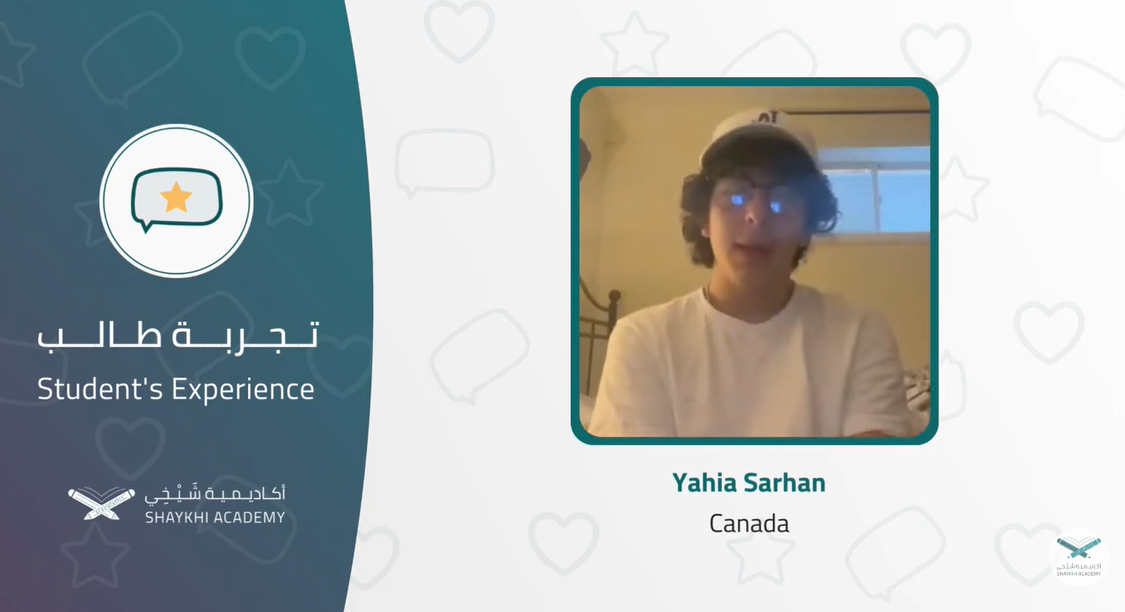
I’m Yahia Sarhan, I’m 15 years old and I’m from Canada. I’ve been a student at Shaykhi Academy since 2019, so about three or four years now. It’s been a great learning opportunity for me and I’ve learned a lot about Islamic studies, the Quran, and Arabic reading. I’d definitely recommend it to anyone who’s trying to learn.
The American Quran Institute offers structured Arabic instruction through qualified teachers, flexible scheduling, and curriculum addressing both Classical and Modern Standard Arabic.
Students considering Arabic classes in New Jersey often ask about lesson structure, teacher qualifications, scheduling flexibility, and curriculum scope before enrolling.