The American Quran Institute’s Arabic classes in Detroit teach Modern Standard Arabic and Quranic Arabic through structured one-on-one sessions. Students work directly with qualified instructors who focus on Arabic reading accuracy, Arabic writing mechanics, Arabic listening comprehension, and Arabic speaking confidence across beginner through advanced levels.
Detroit’s Arab American community represents one of the largest concentrations outside the Middle East. Arabic fluency opens professional doors in healthcare, education, translation, community organizing, and interfaith work. Learning Arabic also strengthens family bonds and cultural identity for second and third-generation heritage speakers.
More Details Pricing Testimonials
The American Quran Institute’s Arabic classes in Detroit cover foundational Arabic alphabet recognition, vowel marking systems (Harakat), sentence construction rules (Nahw), verb conjugation patterns, noun declension, and contextual vocabulary building. Lessons address both Quranic Arabic structures and Modern Standard Arabic used in media, literature, and formal communication across Arab nations.
Students practice Arabic reading through graded texts, Arabic writing through composition drills, Arabic listening via recorded dialogues, and Arabic speaking through live instructor interaction. Grammar concepts are introduced incrementally, not frontloaded. Pronunciation drills focus on sounds unfamiliar to English speakers—ع, ح, ق, ص, ض, ط, ظ, خ, غ.
The American Quran Institute’s Arabic classes in Detroit follow a methodical progression from script mastery to conversational fluency, adapted to each student’s starting level.
Students learn all 28 Arabic letters in isolated, initial, medial, and final forms. Instructors drill correct pen strokes, connecting ligatures, and distinguishing similarly shaped letters—ب, ت, ث, ن, ي. Writing practice begins immediately, not after passive memorization. Students trace, copy, then produce letters independently before moving forward.
Short vowels (Fatha, Kasra, Damma), Sukoon, Shadda, and Tanween are introduced through reading exercises, not abstract charts. Students read vowel-marked words aloud, make correction-based adjustments, then apply patterns to new vocabulary. Instructors isolate common vowel-error triggers—confusing Kasra with Fatha under similar consonants—and address them through targeted repetition.
Basic Nahw rules—subject-verb agreement, gender distinctions, definite articles (ال), possessive pronouns—are taught through sentence-building drills. Students construct simple declarative statements, question forms, and negations using vocabulary already learned. Grammar explanations stay tied to immediate application, not memorized rule lists. Verb conjugation begins with present tense (المضارع) before introducing past tense (الماضي).
Students listen to recorded Arabic dialogues at natural speed, identify known vocabulary, infer meaning from context, then discuss content with instructors. Speaking practice includes pronunciation drills, guided dialogue repetition, and spontaneous sentence generation. Instructors correct mispronunciations in real time—especially consonant clusters and vowel length distinctions unfamiliar to English speakers.

Outcomes
Students decode vowel-marked Arabic passages at natural reading pace without hesitation or phonetic guessing. They distinguish between Fatha, Kasra, Damma, Sukoon, Shadda, and Tanween automatically. This Arabic reading skill applies to Quran recitation, classical literature, and Modern Standard Arabic journalism.
Students compose grammatically coherent Arabic sentences using proper subject-verb agreement, noun-adjective order, and preposition usage. They spell words accurately, connect letters correctly, and apply Hamza rules. Arabic writing proficiency supports formal correspondence, note-taking during Arabic lectures, and translation work.
Students comprehend spoken Modern Standard Arabic in news broadcasts, lectures, and formal dialogue. They identify root words, track verb tenses, and interpret context when unfamiliar vocabulary appears. Arabic listening comprehension allows engagement with Arabic podcasts, interviews, and religious lectures without constant translation dependence.
Students produce Arabic sounds correctly—ع, ح, ق, ص, ض, ط, ظ, خ, غ—and articulate words without anglicized pronunciation errors. They hold basic conversations, ask clarifying questions, and respond to common dialogue prompts. Arabic speaking confidence grows through consistent instructor feedback and structured speaking drills.
Students recognize grammatical structures unique to Quranic Arabic—verb patterns (أوزان), construct phrases (إضافة), and conditional clauses. They parse Quranic verses grammatically, identify subjects and objects, and understand how word order affects meaning. This Arabic grammar foundation supports independent Tafsir reading and deeper Quranic comprehension.
Students use Arabic fluency in healthcare interpretation, community outreach, translation services, interfaith dialogue, and cultural programming. Arabic proficiency enhances resumes, opens specialized job roles, and strengthens credibility in Detroit's Arab American civic organizations. Language skills translate into measurable career advantages within Michigan's diverse professional landscape.
Why Choose us?
Every lesson is private, scheduled around work, school, or family obligations. No group delays or rigid class times.
Instructors hold certifications in Arabic pedagogy and Quranic studies. They correct pronunciation errors English speakers make unconsciously.
Students choose curriculum focus—Modern Standard Arabic for media and professional use, or Quranic Arabic for religious study.
Lessons start at accessible rates. No hidden fees, registration costs, or mandatory package purchases. Pricing fits tight budgets.
Beginners start with alphabet basics. Advanced students refine grammar, expand vocabulary, or deepen Quranic Arabic comprehension at their own speed. Beginners start with alphabet basics. Advanced students refine grammar, expand vocabulary, or deepen Quranic Arabic comprehension at their own speed.
Students speak Arabic aloud every lesson. Instructors respond, correct, and guide real-time. Passive listening doesn't build speaking fluency—active repetition does.
Instructors assess Arabic reading accuracy, Arabic writing mechanics, and grammar application regularly. Students see measurable improvement across months, not vague encouragement.
Students anywhere in Detroit—Dearborn, Hamtramck, Sterling Heights, Warren—access lessons online. Physical location doesn't limit instructor availability or curriculum access.
Areas we serve
The American Quran Institute serves students across the United States—New York, Los Angeles, Chicago, Houston, Detroit, Dearborn—and globally through online Arabic classes for learners worldwide.
Related Courses
The American Quran Institute offers Beginner through Advanced Arabic, Quranic Arabic grammar, Modern Standard Arabic conversation, Tajweed, Hifz, Noorani Qaida, Islamic Studies, and specialized tracks for adults, kids, and professionals.
The American Quran Institute's Quran Tafsir Course in the USA equips American Muslims with deep Quranic understanding through structured Islamic scholarship. Students explore classical Tafsir methodologies, contextual meanings, and linguistic analysis under qualified scholars who connect revelation to modern American life.
Explore Course
The American Quran Institute's Quran Memorization Course in the USA equips students with authentic Hifz techniques rooted in classical methodology. Learners master retention strategies, Tajweed application during memorization, and review cycles that prevent forgetting. The curriculum addresses Makharij accuracy, memorization pace management, and long-term retention frameworks used across centuries of Islamic scholarship.
Explore Course
The American Quran Institute's Quran classes in Plano are live, one-on-one online sessions taught by Ijazah-certified instructors. Quran Lessons cover Noorani Qaida foundations, Tajweed-compliant recitation, Makharij correction, and Quranic Arabic grammar structured by level, paced to the individual student.
Explore CourseDetroit students ready to build Arabic fluency can enroll in personalized one-on-one sessions starting this week. No prior Arabic knowledge required.
Testimonials
The American Quran Institute's students achieve Arabic fluency, Quran memorization milestones, and professional advancement in healthcare, education, translation, and community leadership roles across the United States.
I joined Shaykhi Academy to improve my Tajweed, and I noticed a steady improvement in my reading after a few weeks. The lessons are structured and easy to follow and the teachers and patient and professional. My teacher, Dr. Mahmoud explains concepts clearly and makes sure I understand before moving on. I’ve found that my pronunciation has improved during prayer and in reading Quran since starting the course. Overall my experience is very positive, and I would recommend it to others who want to improve in their Quran journey.
Asalamu Alaikum! I’m so blessed I found Shaykhi Academy. My teacher Ms. Nada is so caring and compassionate about teaching. I’ve learning and gaining lot of meaningful Islamic knowledge and mastering the Arabic Quran reading. The Service Company is very helpful, cooperative and passionated as well.
Real transformations from students who mastered the Quran with our courses
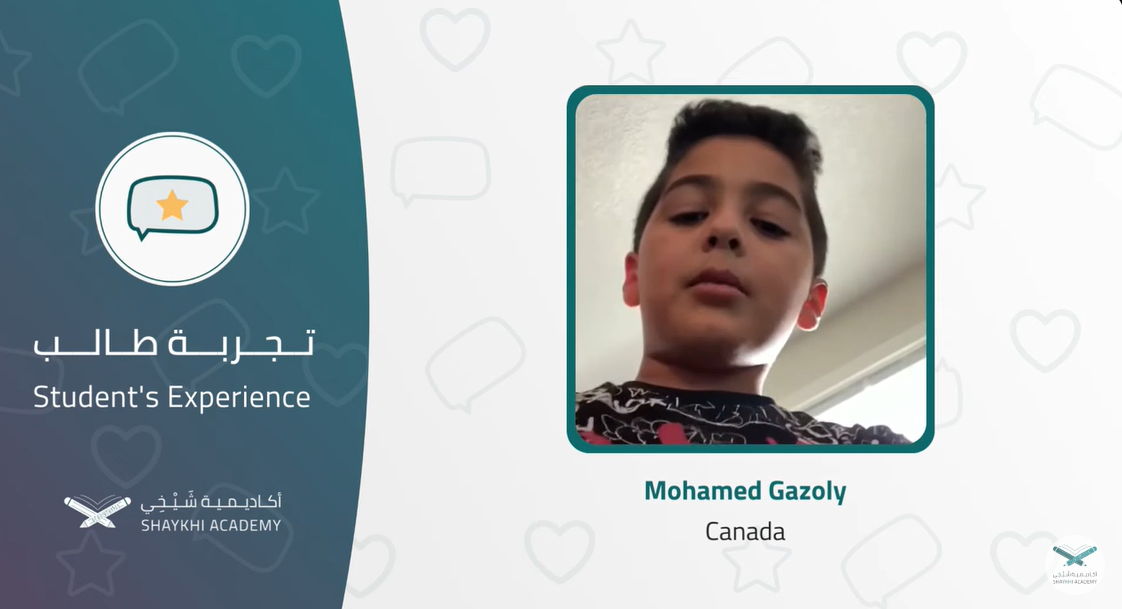
I took a class at Shaykhi Academy with Mr. Luqman, and I had a lot of fun learning with him. I even got the chance to meet him in Egypt! I learned a lot from my time with him, including Tajweed, Tahweed, Arabic reading, and Quran. I've been learning with him for about a year now. Thank you for your time.
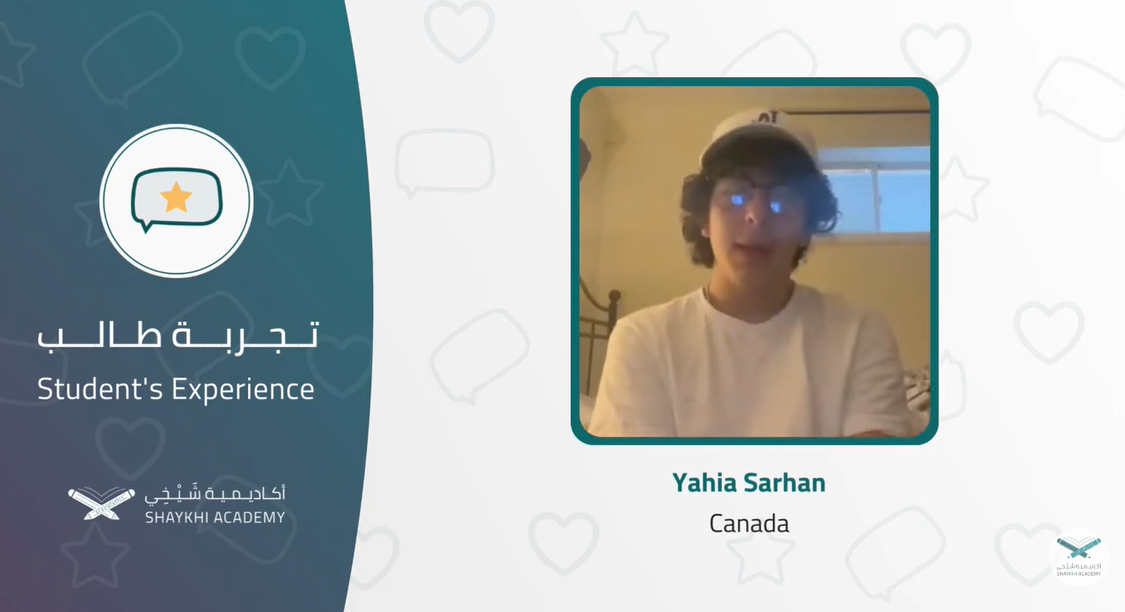
I’m Yahia Sarhan, I’m 15 years old and I’m from Canada. I’ve been a student at Shaykhi Academy since 2019, so about three or four years now. It’s been a great learning opportunity for me and I’ve learned a lot about Islamic studies, the Quran, and Arabic reading. I’d definitely recommend it to anyone who’s trying to learn.
Students enrolling today receive structured Arabic curriculum, qualified instructor support, and measurable progress toward fluency goals within months, not years.
Common questions Detroit students ask before enrolling in The American Quran Institute's Arabic classes in Detroit.