 Quran
Quran

| Key Takeaways |
| American learners need a structured sequence — Arabic letters, Tajweed rules, then full Quran reading — to avoid years of bad habits. |
| Online one-on-one instruction with a qualified Quran teacher is the most effective and accessible path for learners in the United States. |
| Adults with no Arabic background can reach independent Quran reading within 6–12 months of consistent, structured practice. |
| Noorani Qaida is the most widely used and pedagogically sound starting point for English-speaking beginners before Quran text. |
| Converts and adult beginners should prioritize the surahs used in daily Salah before advancing to sequential Quran reading. |
Learning the Quran in the USA is fully achievable for any motivated adult, family, or convert — with the right structure and a qualified instructor. Start with Arabic letter recognition, build Tajweed fundamentals, then advance to reading full Quran with accuracy. Most learners who struggle have skipped one of these foundations.
This guide walks through each stage in order — what to do, why it matters, and what to avoid at each step. It is written specifically for English-speaking learners in the United States who have no prior Arabic background and need a practical, realistic roadmap, not generic advice.
1. Understand What You Are Actually Learning Before You Begin
Learning the Quran in the USA means working across three distinct skills at once: recognizing Arabic script, applying Tajweed recitation rules, and building reading fluency. Each skill builds on the previous one.
Most learners who plateau or quit early tried to skip the sequence — jumping into Quran text before they could reliably read Arabic letters.
You are not learning a foreign language in full. You are learning to read a specific script, apply a specific set of pronunciation rules, and build enough fluency to recite with accuracy. That is achievable for any English-speaking adult who approaches it systematically.
Why the sequence matters:
- Arabic letters change shape depending on their position in a word
- Tajweed rules govern how letters are pronounced in context, not in isolation
- Reading fluency only develops after both foundations are stable
Learners who begin with Quran text directly — reciting from transliteration or imitating audio — consistently develop the same set of errors.
In our experience at The American Quran Institute, students who arrive having learned from transliteration alone almost always share one critical gap: they can recite memorized text but cannot read a single unfamiliar line independently.
Shots Videos from Our Courses
Start Your Quranic Education
Join our premier online institute for structured Quranic learning tailored for students in the USA.
Book Your Free Trial2. Build Your Foundation With Noorani Qaida
Noorani Qaida is the most established and pedagogically sound bridge between Arabic letter recognition and actual Quran reading. It is not optional. Every serious Quran teacher — regardless of school or tradition — uses a structured foundational text like Noorani Qaida before introducing students to Quran pages. Skipping it is the single most common reason adult learners stall.
Noorani Qaida introduces Arabic letters in isolation, then combines them into two-letter and three-letter clusters, then into syllables, then into word-length patterns — all before a single Quran verse appears.
This sequencing trains the eye and the tongue to work together. By the time a student reads their first Quranic line, the mechanical reading process is already largely automatic.
Our Noorani Qaida Course for Adults at The American Quran Institute is designed specifically for English-speaking learners — built around the reading patterns American adults need to work through systematically, with no assumed background and no rushing.
Book a FREE trial class in our Noorani Qaida classes

Typical Noorani Qaida timeline for adult beginners:
| Learner Type | Average Duration |
| Adult with 20 min/day consistent practice | 6–10 weeks |
| Adult with 45+ min/day practice | 3–5 weeks |
| Child (ages 6–10) with guided instruction | 8–14 weeks |
| Adult with irregular practice (2–3x/week) | 3–5 months |
3. Learn Tajweed Rules as You Begin Reading Quran Text
Tajweed is the set of rules governing correct Quran recitation — covering articulation points (makhraj), letter characteristics (sifat), and rules of connection and pause.
You do not need to master all Tajweed rules before touching the Quran. You do need to begin applying them from the first page of Quran text.
The most common Tajweed rules an American beginner will encounter immediately include:
- Noon sakinah and tanween rules: Ikhfa (concealment), Idgham (merging), Iqlab (substitution), and Izhar (clear pronunciation) — the trigger in each case is the letter that follows noon sakinah or tanween
- Meem sakinah rules: Ikhfa shafawi and Idgham shafawi
- Qalqalah: The echo sound applied to the five letters ق ط ب ج د when they appear with sukun — its intensity is stronger in waqf (pause) position than in mid-word position
- Madd (elongation) rules: The basic madd is 2 counts; connected and obligatory madd reach 4–6 counts depending on position
In our experience, the Noon sakinah rules cause the most difficulty for adult English-speaking learners — specifically Ikhfa, where the Noon is partially concealed with nasal resonance (ghunnah) held for two counts. The tendency is to either fully pronounce the Noon or fully drop it. Neither is correct.
Proper Ikhfa requires a specific nasalized suspension that most learners need 3–4 weeks of targeted correction to produce consistently.
Our Tajweed classes in the USA at The American Quran Institute teach these rules in plain English — no assumed knowledge, just accurate instruction from qualified teachers who work with American learners daily.
Start learning Tajweed with a FREE trial session

4. Prioritize the Short Surahs Used in Daily Salah
Before reading the Quran sequentially from Surah Al-Baqarah, every Muslim learner in the USA should first be able to recite the surahs required in Salah with correct Tajweed. These are the verses you will use five times every day for the rest of your life. Getting them right is more immediately impactful than any other milestone.
The foundation of every Muslim’s recitation starts with Surah Al-Fatiha — the seven verses recited in every rak’ah of every prayer. Every learner should master Al-Fatiha with full Tajweed accuracy before advancing.
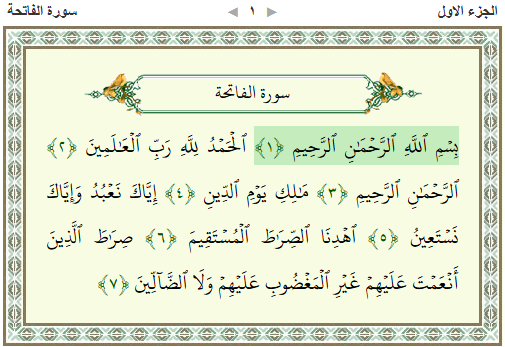
Beyond Al-Fatiha, the short surahs of Juz Amma (the 30th Juz) are the practical starting point for Salah recitation. Surahs Al-Ikhlas, Al-Falaq, An-Nas, Al-Kawthar, Al-Asr, and Al-Fil are among the most commonly recited in prayer and are short enough to memorize with Tajweed accuracy within the first months of learning.
For converts especially: This step is not a detour — it is the most relevant application of everything you are learning. Correct Salah recitation is both a spiritual priority and the fastest way to internalize Tajweed rules through daily repetition.
Read also: HOW TO LEARN THE QURAN BY YOURSELF IN THE USA?
5. Work Through the Quran Sequentially With a Qualified Teacher
Once foundational reading is established, the most effective approach for learning the Quran in the USA is to read sequentially from the beginning — starting at Surah Al-Baqarah — under consistent supervision from a qualified instructor.
Sequential reading builds cumulative familiarity with Quranic vocabulary and style that random selection cannot replicate.
A qualified teacher serves three functions that no app or audio recording can replicate: immediate error correction, rule-specific feedback tied to the exact text you are reading, and the accountability that sustains consistent practice over months.
The Prophet ﷺ emphasized the importance of learning the Quran with proper recitation. As recorded in Sahih Muslim:
“The one who is proficient in the recitation of the Quran will be with the honorable and obedient scribes (angels) and he who recites the Quran and finds it difficult to recite, doing his best to recite it in the best way possible, will have a double reward.”
This hadith is particularly meaningful for American adult learners. Difficulty is not a disqualifier — it is an acknowledged part of the path. What matters is reciting correctly and persisting.
The American Quran Institute’s programs are designed around the reality of American life — flexible scheduling, one-on-one sessions, and instructors who understand that consistent progress matters more than speed.Explore our adult Quran classes in the USA to find the right starting point.
Start learning Quran with a FREE trial class

6. Build a Realistic Daily Practice Schedule That Fits Your Life
The single most reliable predictor of Quran learning progress in the USA is not talent, prior background, or learning speed — it is session frequency. Two 20-minute sessions per day consistently outperform one 60-minute session on weekends.
The Arabic reading and Tajweed circuits that need to develop in the brain are built through repetition over time, not through occasional intensity.
A realistic practice framework for American adult learners:
| Practice Element | Recommended Daily Time |
| New lesson or new Quran text | 15–20 minutes |
| Review of previous lesson material | 10–15 minutes |
| Listening to a qualified reciter (Quran audio) | 10 minutes |
| Total daily minimum | 35–45 minutes |
The listening component is underused by most self-directed learners. Regular exposure to accurate recitation — from reciters like Sheikh Mahmoud Khalil Al-Husary, whose recordings are specifically used for Tajweed training — builds the ear for correct pronunciation before the mouth can fully produce it.
Students who come to The American Quran Institute having tried self-study almost universally report the same pattern: they were consistent for the first few weeks, then life disrupted the routine, and restarting became progressively harder.
Scheduled one-on-one sessions with a teacher create an external accountability structure that self-study cannot replicate.
Read also: HOW TO LEARN THE QURAN ALPHABET IN THE USA?
7. For Families and Children, Start With a Structured Kids Program
Learning the Quran in the USA as a family requires a different approach for children than for adults. Children ages 4–12 learn Quran most effectively through short, frequent, highly structured sessions with an instructor trained in child-appropriate pedagogy — not through the same sequential curriculum used for adults.
The most effective sequence for children mirrors the adult path in structure but differs in pacing and method: Arabic letters through an age-appropriate Noorani Qaida, then short surahs for Salah with Tajweed, then the beginning of Hifz if the family chooses that path.
Our Kids Quran Program in the USA at The American Quran Institute gives children a structured, age-appropriate path to memorization and Tajweed — with instructors trained to keep young learners engaged and progressing. For families interested in memorization specifically, our Kids Quran Memorization Program provides the scaffolding children need to reach Hifz milestones without burnout.
Enroll your child in our Quran classes for kids with a FREE session

For parents learning alongside their children, this shared practice is one of the most powerful motivational structures we see — accountability flows in both directions, and children whose parents are visibly learning consistently outperform those who learn in isolation from family.
Our Students Reviews
Start Your Quranic Education
Join our premier online institute for structured Quranic learning tailored for students in the USA.
Book Your Free TrialStart Learning the Quran in the USA With Qualified Instruction at The American Quran Institute
The path to learning the Quran in the USA is structured, sequential, and achievable — with the right teacher and a realistic schedule built around your life.
The American Quran Institute provides:
- Structured programs for adults, children, converts, and families
- Qualified instructors with proven experience teaching English-speaking American learners
- Flexible one-on-one scheduling — no rigid timetables
- Step-by-step curriculum from Arabic letters through full Quran reading
- A welcoming environment for absolute beginners and converts
- Free trial session available — no commitment required
Check out our top courses for Quran learning:
- Quran Classes for Adults
- Tajweed Classes
- Hifz Quran
- Noorani Qaida classes
- Quran classes for kids
- Hifz for Kids
- Noorani Qaida classes for kids
- Ijazah Course
Book your FREE trial session today
Conclusion
Learning the Quran in the USA is not complicated when the steps are clear. Arabic letter recognition, Noorani Qaida, Tajweed fundamentals, and consistent practice with a qualified teacher — in that order — are what produce lasting, independent recitation ability.
The learners who succeed are not the ones with the most prior knowledge. They are the ones who start with the right foundation and practice consistently. Every step in this guide builds directly on the previous one. Work through them in sequence, and the progress will follow.
Frequently Asked Questions About How to Learn the Quran in the USA
Can Adults With No Arabic Background Learn to Read the Quran?
Yes, adults with zero Arabic background can absolutely learn to read the Quran — and they do so regularly at The American Quran Institute. The structured sequence of Arabic letters, Noorani Qaida, and Tajweed fundamentals is specifically designed for learners starting from scratch. Most motivated adults reach basic independent reading within 6–12 months of consistent practice.
How Long Does It Take to Learn the Quran in the USA?
Basic Quran reading with foundational Tajweed typically takes 6–12 months for an adult beginner practicing 35–45 minutes daily with a qualified teacher. Full Quran memorization (Hifz) is a multi-year commitment — most adults with full-time schedules complete it in 4–7 years with consistent, structured effort.
What Is the Best Way to Learn the Quran Online in the USA?
The most effective method is one-on-one online instruction with a qualified teacher — not apps, YouTube videos, or group classes alone. Live instruction provides immediate error correction, personalized pacing, and accountability that self-directed learning cannot match. A qualified teacher identifies and corrects Tajweed errors before they become ingrained habits.
Do Converts Need to Learn Arabic to Read the Quran?
Converts do not need to learn spoken Arabic to read the Quran — they need to learn Arabic script and Tajweed recitation rules. These are specific, learnable skills distinct from Arabic language fluency. Most converts in The American Quran Institute reach reliable Salah recitation within their first few months of structured study.
At What Age Should Children Start Learning the Quran?
Children can begin structured Quran learning as early as age 4 with a qualified teacher trained in early-childhood instruction. The starting point is Arabic letter recognition through an age-appropriate Noorani Qaida — not Quran text directly. Consistent short sessions (15–20 minutes) at this age are more effective than longer, infrequent ones.





Leave a Reply