 Quran
Quran
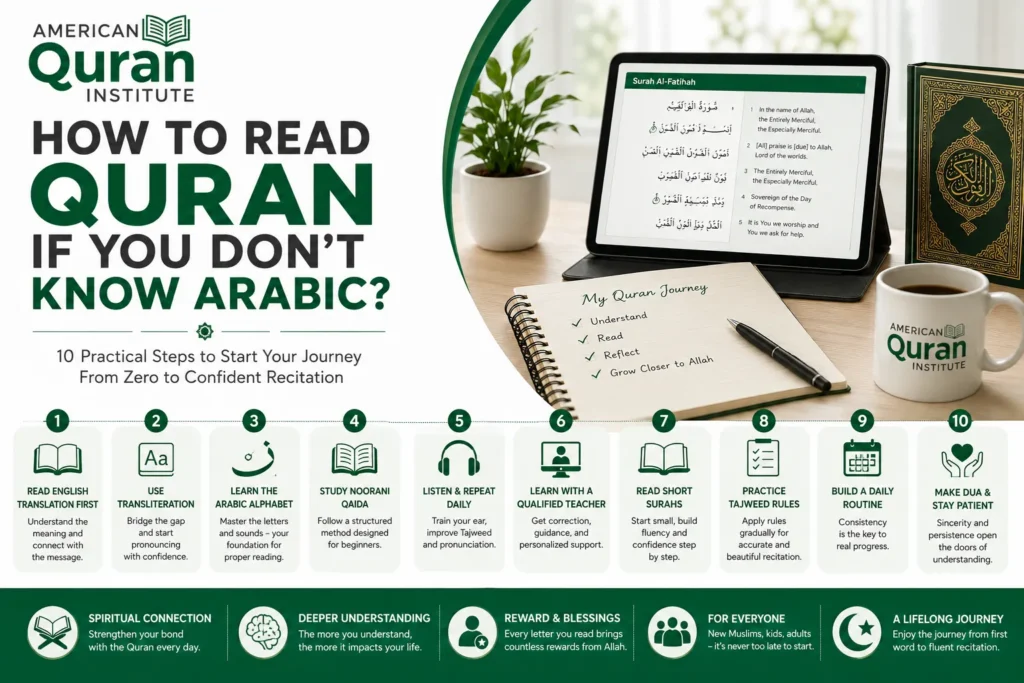
You don’t need to wait until you’re fluent in Arabic to begin your relationship with the Quran. Millions of American Muslims — converts, born Muslims, children of immigrants, people returning to their faith after years away — have faced the same question: how to read the Quran if you don’t know Arabic?
The answer is that there’s not one path forward, but ten. Each one moves you closer to the Book of Allah, starting exactly where you are right now.
The Prophet Muhammad ﷺ promised something specific to those who struggle with recitation: “The one who recites with difficulty, stammering or stumbling through its verses, will have twice the reward.” That’s not a consolation — it’s an invitation to begin today, however imperfect your Arabic may be.
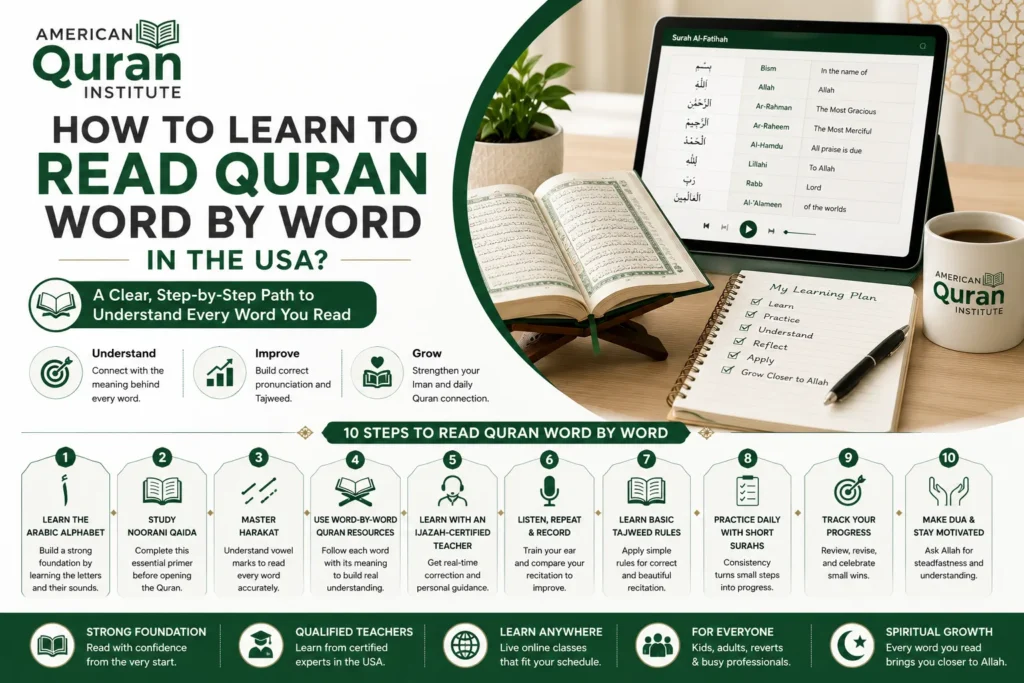
This guide covers ten practical, sequenced methods for English-speaking Muslims in the United States, from reading a translation for the first time all the way through to studying with a certified teacher and building a sustainable daily recitation practice.
1. A Reliable English Translation Is Your First Aid To Know How To Read Quran If You Don’t Know Arabic
The Quran’s message is accessible to you today, in English. Before attempting pronunciation or the Arabic script, reading a quality translation gives you everything that matters most: the guidance, the stories of the prophets, the moral principles, and the direct address Allah makes to His creation.
Not all translations carry equal weight among scholars. For American readers, Sahih International is widely respected for its accuracy and straightforward language. The Clear Quran by Dr. Mustafa Khattab was written specifically for an English-speaking audience and reads naturally without feeling stilted.

The Study Quran, edited by Seyyed Hossein Nasr, suits readers who want scholarly commentary alongside the translated text. A practical reading method: before attempting to recite any passage, read its English meaning first. Three to five verses at a time, with genuine reflection on what you’ve just read, builds far more connection with the Quran than rushing through pages you don’t understand.
This is also where you’ll discover the powerful motivations to read quran more consistently — once you know what you’re reciting, the words carry an entirely different weight.

2. Use Transliteration As A Bridge — Not As Your Quran Reading Final Destination
Transliteration renders Arabic sounds in Latin letters so English speakers can pronounce Quranic verses phonetically. “بِسْمِ اللَّهِ الرَّحْمَٰنِ الرَّحِيمِ” becomes “Bismillahi r-rahmani r-rahim.” For a complete beginner with no Arabic background, it’s a genuine entry point — not a workaround, but a legitimate tool used by learners around the world.
A. How Transliteration Of Quran Is Beneficial For New Learners?
For anyone just starting out, learning how to read the quran without years of Arabic study begins with gaining immediate access to recitation. Transliteration provides exactly that. You can begin Surah Al-Fatihah today using transliterated text paired with a recorded recitation — listen, repeat, and adjust. This is how most new learners make their first real contact with Quranic pronunciation.
Begin Learning Quran as a Beginner in the USA With Confidence

B. Why Transliteration Isn’t Enough For Long-Term Quran Learning?
Arabic contains sounds that English simply doesn’t have: the ع (ayn), ح (ha), خ (kha), and ق (qaf) have no equivalents in any Latin-script language. Transliteration approximates these sounds but cannot replicate them. A learner who stays with transliteration for years will plateau — their recitation will remain inaccurate in ways they can’t self-diagnose because they have no reference point for the correct sound.
Treat transliteration as a six-to-twelve-week scaffold while you begin learning the Arabic alphabet in parallel. Use it to get the rhythm and feel of short surahs, then phase it out as your letter recognition develops. The two approaches should run simultaneously, not sequentially.
See Us in Action!
Take a look inside our virtual classrooms. Watch the clip below to see how our instructors engage with students, simplify complex rules, and create an inspiring environment for learning.
Start Your Quranic Education
Join our premier online institute for structured Quranic learning tailored for students in the USA.
Book Your Free Trial3. Learning The Arabic Alphabet Is The Foundation That Changes Everything
Most adult American learners dramatically underestimate how quickly they can learn the Arabic alphabet. The Arabic script has 28 letters. With focused daily practice of 15 to 20 minutes, most adults can recognize all letter forms within four to six weeks. Reading short connected words follows within two to three months.
The standard method for beginners is the Noorani Qaida — a structured primer developed by Sheikh Noor Muhammad Haqqani that teaches letter forms, vowel markings (harakat), and pronunciation rules in carefully sequenced stages. It takes the learner from isolated letters through connected forms, short words, and finally Quranic phrases.
For anyone asking how to learn the quran alphabet from zero as an adult, the Noorani Qaida is the clearest, most widely used path across the Islamic world. A point that most self-study guides skip: working through the Noorani Qaida with a live teacher — even 30 minutes per week — dramatically outperforms self-study alone.
Book a FREE trial class in our Noorani Qaida classes

4. Listen To Skilled Quran Reciters Daily
The Quran was transmitted orally through an unbroken chain from the Prophet ﷺ to the present day. Before it existed as a written text, it existed as a memorized, recited reality — and this means the ear is not a secondary tool in Quran learning. It’s primary.
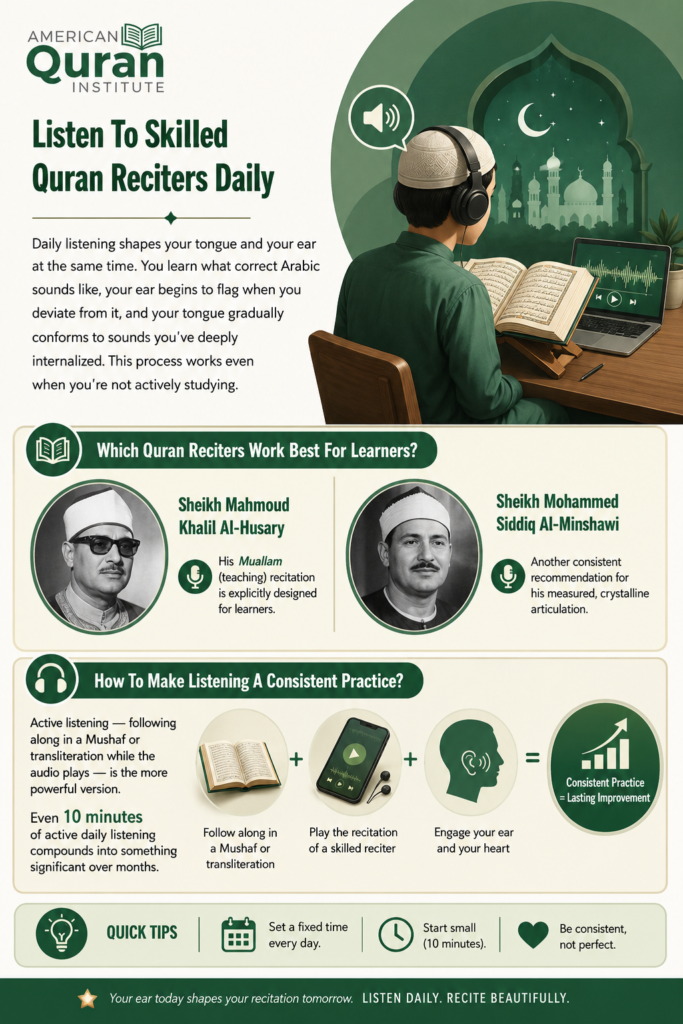
Daily listening shapes your tongue and your ear at the same time. You learn what correct Arabic sounds like, your ear begins to flag when you deviate from it, and your tongue gradually conforms to sounds you’ve deeply internalized. This process works even when you’re not actively studying.
Which Quran Reciters Work Best For Learners?
Sheikh Mahmoud Khalil Al-Husary’s Muallam (teaching) recitation is explicitly designed for learners. He pauses between phrases, repeats sections, and recites at a deliberate pace that allows you to echo each portion. Sheikh Mohammed Siddiq Al-Minshawi is another consistent recommendation for his measured, crystalline articulation.
Both are freely available on Quran.com and YouTube, and both are approved by scholars as reliable references for correct recitation.
How To Make Listening A Consistent Practice?
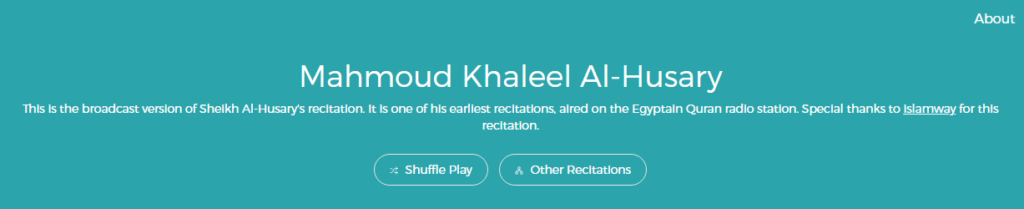
Passive listening counts. The benefits of reciting quran extend to attentive listening, confirmed directly in Surah Al-A’raf: “When the Quran is read, listen attentively, and fall silent, so that you may be blessed with mercy.” (7:204) Play a recitation during your commute, while cooking, or in the background at work.
Active listening — following along in a Mushaf or transliteration while the audio plays — is the more powerful version. Even 10 minutes of active daily listening compounds into something significant over months.
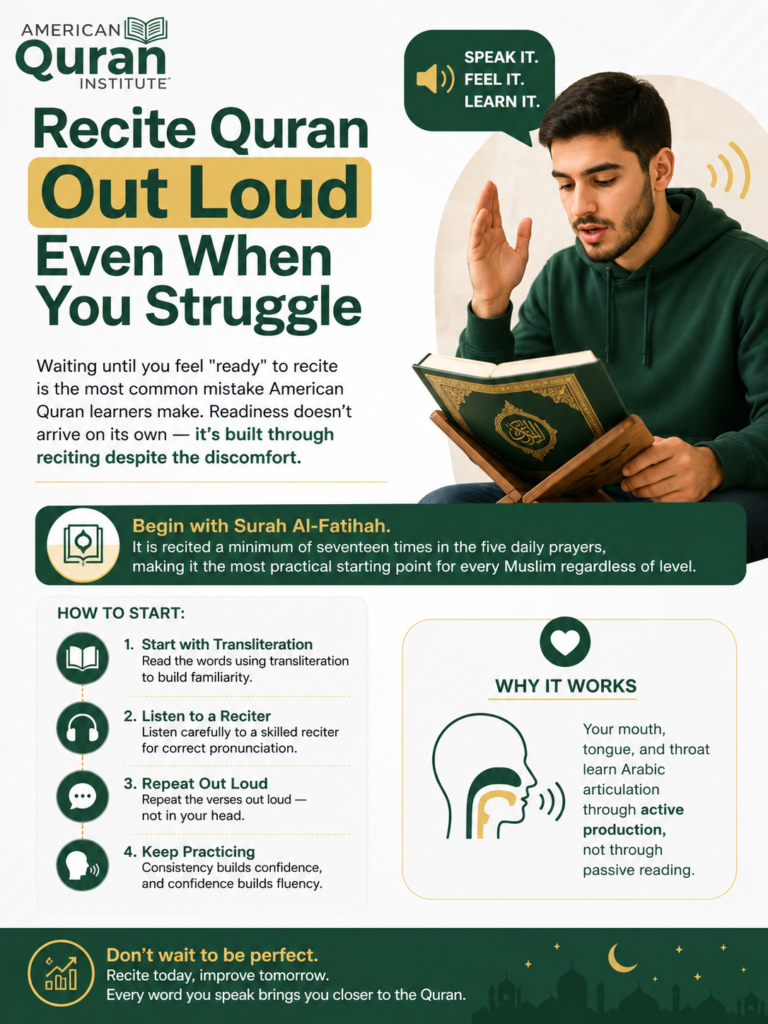
5. Recite Quran Out Loud Even When You Struggle
Waiting until you feel “ready” to recite is the most common mistake American Quran learners make. Readiness doesn’t arrive on its own — it’s built through reciting despite the discomfort.
Begin with Surah Al-Fatihah. It is recited a minimum of seventeen times in the five daily prayers, making it the most practical starting point for every Muslim regardless of level. Start with transliteration, listen to a reciter for the correct sound, and repeat out loud — not quietly in your head. Your mouth, tongue, and throat learn Arabic articulation through active production, not through passive reading.
Once Al-Fatihah is solid, move to the short surahs at the end of the Quran — Juz Amma. Al-Ikhlas is four verses. Al-Kawthar is three. Al-Asr is three. These are manageable, frequently used in prayer, and each carries complete theological meaning.
For anyone who wants to understand how to read the quran faster and more fluently over time, mastering these short surahs first is the decision framework experienced teachers consistently apply — fluency in small passages builds the mechanical patterns your tongue needs before longer surahs become approachable.
6. Start With Short Surahs And Commit To A Daily Schedule
Consistency beats intensity in Quran learning, without exception. Ten focused minutes every day produces more lasting progress than two hours on a Sunday. The memory doesn’t consolidate sporadic sessions the way it does repeated, spaced exposures — and Arabic pronunciation requires the kind of repetition that only a daily habit can provide.
How to start reading the quran daily without it becoming a burden: anchor it to something you already do. Many US-based Muslims find the time immediately after Fajr, before leaving for work or school, or in the final minutes before sleep.
The key is setting a minimum commitment so small that you have no excuse to skip — even two verses on a difficult day counts, and maintaining the chain matters more than the length of any single session.
Set a specific weekly target: this week, recite Surah Al-Ikhlas three times each morning. Next week, add Surah Al-Nas. The compounding effect of this approach over three months produces a learner who can recite Juz Amma confidently — a threshold that transforms daily prayer from a practice of sounds into one of meaning.
Read also: LEARN QURAN BY HEART IN THE USA
7. Use A Quran Pen Reader For Immediate Audio Feedback
A Quran pen reader is a digital device that reads aloud any verse or word you point it to from a printed Mushaf. Touch the pen to a line, and the device plays that portion of a professional recitation instantly — no searching, no loading, no navigating an app. You hear the correct pronunciation on demand, at any point in the text.
This tool works especially well for learners who prefer a physical Mushaf over a screen, for older adults who find apps cumbersome, and for parents supervising children’s learning at home.
For learn quran for kids in the usa, the Quran pen reader is among the most recommended home tools among Muslim parents, precisely because it gives children immediate audio reinforcement without requiring a parent who knows Arabic to be present for every session.
Available models typically offer 20 to 27 different reciters, multiple translation language options, and both full-surah and word-by-word playback. For any household where Quran learning is a family priority, it’s a practical one-time investment that pays off across multiple learners.
Begin Your Journey Toward Quran Ijazah Certification Today

8. Follow Tafseer Lectures To Understand What You’re Reading
Recitation without understanding is valuable — the reward for every letter is real regardless of comprehension. But recitation with understanding is transformative. Tafseer is the scholarly explanation of Quranic verses: not just translation, but historical context, linguistic depth, legal implications, and the spiritual dimensions that make the Quran inexhaustible for serious students across centuries.
Scholar Al-Qurtubi captured it plainly: “The metaphor of those who recite the Quran without knowing its tafsir is like people to whom a letter arrives from their king at night when they have no lamp. They are alarmed, not knowing what the letter contains. The one who knows the tafsir is the one who brings a lamp so they can read what it says.”
For English-speaking Americans, accessible tafseer resources include Nouman Ali Khan’s lectures on Bayyinah TV, which cover major surahs with linguistic depth and modern application. Dr. Yasir Qadhi’s YouTube series on Surah Al-Kahf and other passages are scholarly and engaging. SeekersGuidance.org offers structured courses with credentialed scholars available to answer questions.
The goal is not to become a scholar — it’s to understand enough of what you’re reciting that the words land with meaning rather than sound alone.
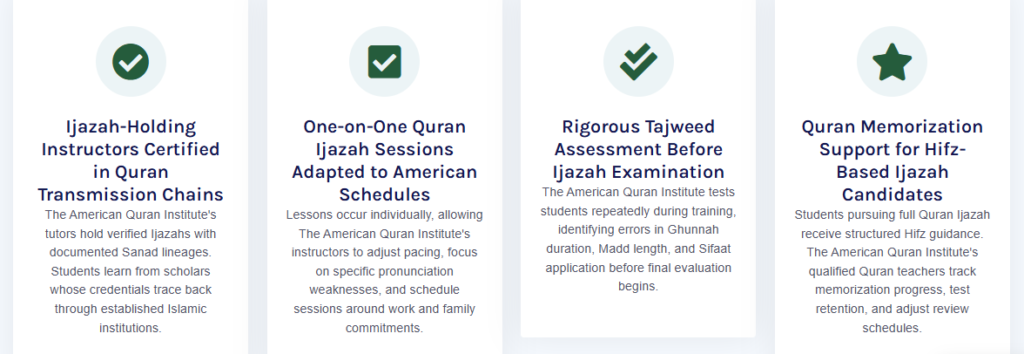
9. Work With An Ijazah-Certified Teacher Online
Tajweed — the rules governing correct pronunciation, elongation, stopping, and articulation — cannot be transmitted accurately through a book, an app, or a recording alone. It requires a qualified teacher who can hear your output in real time and correct it before errors become ingrained.
An Ijazah-certified teacher carries that chain. Their certification means they’ve been formally tested and authorized to teach recitation by another certified scholar — not self-declared, but verified.
Join your first class with our certified teachers online to start your journey with Quran today
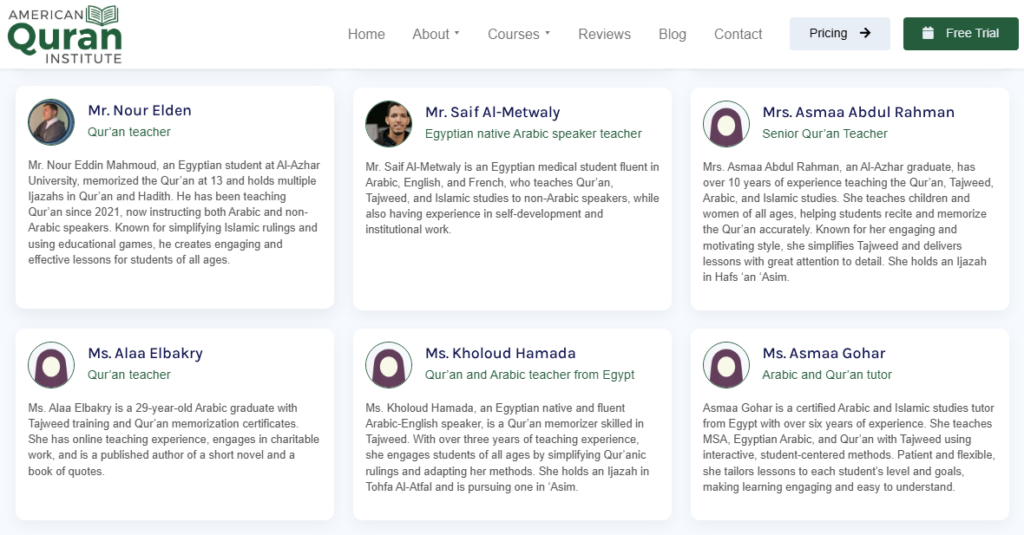
American Quran Institute, based in the USA, connects American Muslims — children, adults, ladies, and new Muslims — with Ijazah-certified teachers who specialize in guiding English speakers from the Arabic alphabet through fluent recitation.
For anyone researching how to learn the quran in the USA through a structured formal program, working with a certified teacher is the path that consistently produces the most accurate, lasting results — and the one most aligned with how the Quran has always been transmitted.
Enroll your child in our Tajweed course for kids with a FREE session
10. Turn Quranic Teachings Into Daily Actions
The tenth method is the one most guides overlook, and it may be the most important of all: take what you understand from the Quran and let it change how you live. Islamic scholars call this tadabbur — deep, active reflection on the meaning and its practical application.
When you read in translation that the Quran commands honesty, practice being more honest that day. When you encounter the verse on patience, apply it to a specific situation you’re facing right now.
When you learn that the Quran describes the believers as those who feed the hungry, look for the concrete way that teaching applies to your life. The Prophet ﷺ said: “The best among you are those who learn the Quran and teach it.” (Bukhari) Teaching begins with living what you know — even one verse.
Self-directed learners who tie their Quran engagement to daily life — rather than treating it as an isolated study session — maintain their practice longer, find deeper meaning faster, and stay more motivated to progress toward fluent Arabic recitation.
Experience Our Classroom Environment
Don’t just take our word for it—experience a live session for yourself! Click on the videos below to watch real snippets from our classes and see our interactive teaching methods in real-time.
Start Your Quranic Education
Join our premier online institute for structured Quranic learning tailored for students in the USA.
Book Your Free TrialCheck Out American Quran Institute’s Top Courses For Quran Learning
American Quran Institute offers live, online classes for every level — from complete beginners learning their first Arabic letters through advanced students pursuing tajweed mastery and Quran memorization. All courses are taught by Ijazah-certified instructors and scheduled around US time zones.
- Quran Qirat Learning Course
- Weekend Quran Classes
- Intensive Quran Course
- Al-Azhar Quran Course
- Quran Classes in USA
- Noorani Qaida Course in the USA
- Online Quran Classes for Kids in the USA
- Online Tajweed Classes in the USA
- Quran Classes for Adults in the USA
- Quran Classes for Females in the USA
- Quran Memorization Course in the USA
- Quran Tafsir Course in the USA
Book your FREE trial session today
Start Your Quranic Education
Join our premier online institute for structured Quranic learning tailored for students in the USA.
Book Your Free TrialConclusion
Learning how to read Quran if you don’t know Arabic is not a single decision — it’s a series of small, layered choices made consistently over time. Start with whatever you have access to right now: a translation, a recording of a master reciter, or the first page of the Noorani Qaida.
Add layers as your confidence grows. Build a daily habit, however small it begins. Find a certified teacher when you’re ready to move beyond what self-study can provide.
Every stage carries its own reward. Whether you’re listening attentively, reading a translation with genuine reflection, sounding out Arabic letters with effort, or reciting surahs from memory with correct tajweed — you are engaging with the Book of Allah. And at every stage, that engagement is real, counted, and rewarded.
Allah Himself made a promise about this: “We have indeed made the Quran easy to understand and remember.” (Surah Al-Qamar 54:17) His promise was not conditional on native Arabic fluency. The path is open, the reward is waiting, and the starting point is exactly where you are.
Frequently Asked Questions
Can I read the Quran in English instead of Arabic?
You can read an English translation of the Quran, and it fully counts as engaging with its meaning and guidance. However, reciting the Quran in its original Arabic text carries a distinct additional reward — the Prophet ﷺ said that each letter earns ten good deeds. Translations convey meaning; Arabic recitation is a separate, parallel act of worship. For most learners, the goal is eventually to do both: read the translation for understanding and recite the Arabic for the specific reward of recitation.
Is it permissible to use transliteration when reading the Quran?
Transliteration is widely used by beginners and is considered a legitimate stepping stone by most Islamic scholars. The general scholarly position permits it for new learners who are actively working toward reading the Arabic script directly. The important condition is that transliteration should be a temporary bridge, not a permanent substitute. Learners who rely on it indefinitely will plateau at an inaccurate level of pronunciation they cannot self-diagnose, because the Latin alphabet cannot represent several essential Arabic sounds.
How long does it take to learn to read the Quran in Arabic?
Most motivated adults can recognize the full Arabic alphabet within four to six weeks of daily practice (15 to 20 minutes per day). Reading short connected Quranic words follows within two to three months. Reaching the point of reading the Quran smoothly with basic tajweed rules takes most learners one to two years working with a qualified teacher. The timeline varies significantly based on daily consistency and whether live instruction is part of the process — students with teachers progress measurably faster than those studying alone.
What should I start with if I know absolutely nothing about Arabic?
Begin two things simultaneously: read three to five verses from a reliable English translation each day with genuine reflection, and listen daily to Sheikh Al-Husary’s Muallam teaching recitation. Both build your connection to meaning and train your ear for correct Arabic sounds. At the same time, begin the Noorani Qaida for the alphabet — even 15 minutes per day. Within a few months, these three tracks — meaning, sound, and script — begin to reinforce one another in ways that accelerate progress on all fronts.
Can I learn Quran recitation online as a Muslim living in the USA?
Yes — and for most American Muslims, online learning is the most practical available option. Live one-on-one sessions with a qualified teacher can be scheduled around US time zones, without the commute, without locating a qualified local teacher, and without restructuring family or work commitments. American Quran Institute offers exactly this: live online classes with Ijazah-certified teachers for children, adults, new Muslims, and ladies, available across all US time zones.
Does listening to the Quran earn reward even if I don’t understand Arabic?
Yes. Listening to the Quran with attention and intention is itself confirmed in the Quran as an act of worship that brings Allah’s mercy. Surah Al-A’raf (7:204) commands attentive listening when the Quran is recited. Islamic scholars consistently hold that the blessing and healing of the Quran reaches both those who understand Arabic and those who do not — the spiritual effect is not conditional on comprehension, though understanding deepens and enriches the experience considerably.





Leave a Reply